

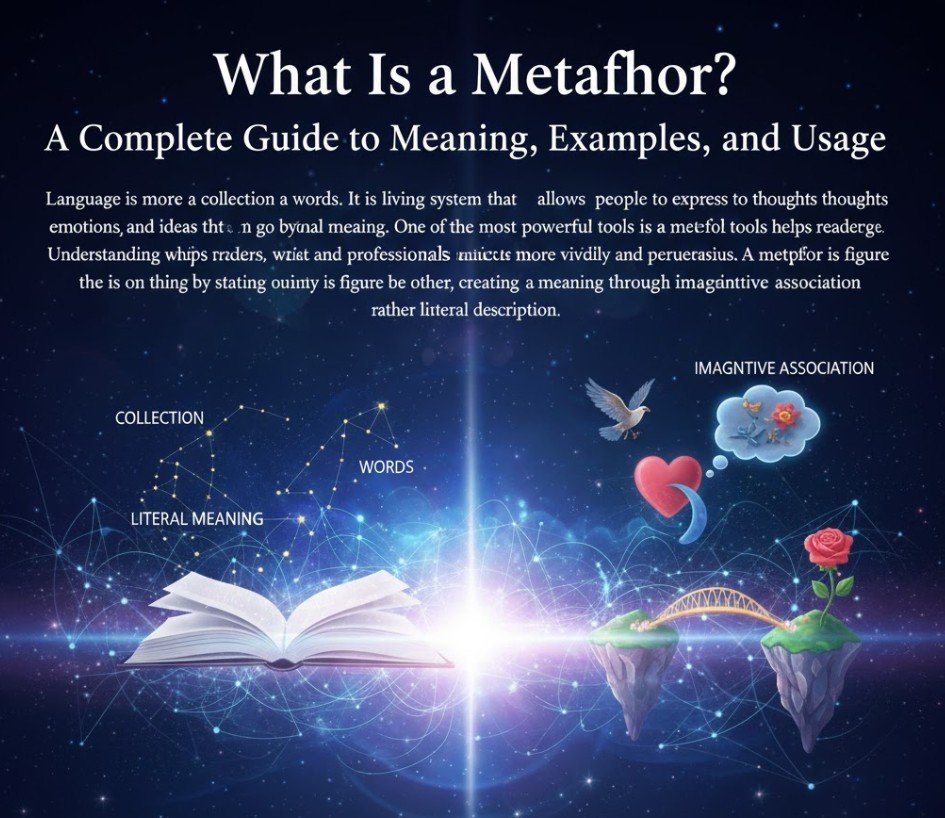
Language is more than a collection of words. It is a living system that allows people to express thoughts, emotions, and ideas that often go beyond literal meaning. One of the most powerful tools in language is the metaphor. Understanding what is a metaphor helps readers, writers, students, and professionals communicate more vividly and persuasively. A metaphor is a figure of speech that directly compares two unlike things by stating one is the other, creating meaning through imaginative association rather than literal description.
From everyday conversation to classic literature, metaphors shape how people understand abstract ideas, emotions, and experiences. This article provides an in-depth, SEO-friendly exploration of what is a metaphor, including clear explanations, rich examples, historical context, and practical insights. By the end, you will not only understand the definition but also recognize how metaphors influence thinking, writing, and communication across cultures and disciplines.
What Is a Metaphor in Simple Terms?
To understand what is a metaphor, it helps to start with a simple explanation. A metaphor is a figure of speech that describes something by saying it is something else, even though the two things are not literally the same. The purpose is not accuracy in a factual sense but clarity and impact in meaning.
When someone says, “Time is a thief,” they do not mean time literally steals objects. Instead, the metaphor suggests that time takes moments, opportunities, and youth without asking permission. This direct comparison allows the listener or reader to grasp an abstract idea quickly and emotionally.
The definition of a metaphor emphasizes direct comparison. Unlike similes, which use words like “as” or “like,” metaphors state that one thing is another. This directness gives metaphors their strength and memorability.
The Core Definition: What Is a Metaphor?
At its core, what is a metaphor can be defined as a figure of speech that directly compares two unlike things by stating one is the other. This comparison highlights shared qualities between the two elements and helps explain or emphasize an idea.
For example, saying “The classroom was a zoo” compares a noisy, chaotic classroom to a zoo. The speaker does not mean animals are present but uses the metaphor to convey disorder and noise. This type of language allows abstract or complex experiences to be understood through familiar images.
Metaphors function as cognitive tools as much as linguistic ones. Research in cognitive linguistics suggests that people use metaphorical thinking to understand complex concepts such as time, love, power, and emotions. This makes metaphors central not only to language but also to human thought.
Why Metaphors Matter in Language and Communication
Understanding what is a metaphor is important because metaphors are everywhere. They appear in daily speech, advertising, politics, education, and art. Phrases like “breaking the ice,” “climbing the ladder of success,” or “a wave of emotions” are all metaphors that shape how people perceive situations.
Metaphors make language more engaging and persuasive. Studies in communication and psychology have shown that metaphorical language increases comprehension and recall. When ideas are framed metaphorically, people are more likely to understand them and remember them later.
In professional settings, metaphors can simplify complex information. In education, teachers use metaphors to explain difficult concepts. In marketing, brands use metaphors to create emotional connections with audiences. In literature, authors rely on metaphors to convey themes and character emotions in powerful ways.
What Is a Metaphor Example in Everyday Language
A common question people ask is what is a metaphor example that they might encounter in daily life. Everyday speech is full of metaphors, often used unconsciously.
When someone says, “I’m drowning in work,” the metaphor compares excessive tasks to being submerged in water. Another familiar example is “Her voice is music to my ears,” which compares a pleasant voice to music to emphasize enjoyment.
These examples show that metaphors are not limited to poetry or academic writing. They are a natural part of communication that helps people express feelings and experiences more vividly than literal language alone.
What Is a Metaphor Examples in Literature
Literature offers some of the most memorable metaphor examples. Writers use metaphors to create imagery, deepen meaning, and evoke emotion. Classic and modern works alike rely on metaphor as a central stylistic device.
In Shakespeare’s plays, metaphors appear constantly. When he writes, “All the world’s a stage,” he compares life to a theatrical performance, suggesting that people play roles and life unfolds in acts. This metaphor captures complex ideas about identity, fate, and performance in a single line.
In modern literature, metaphors continue to shape storytelling. Authors use them to explore themes such as love, loss, freedom, and identity. Understanding what is a metaphor allows readers to appreciate these deeper layers of meaning.
Also Read: How to Lose Weight Fast on Metformin Safely
The Difference Between Metaphor and Simile
Although metaphors and similes are related, they are not the same. Understanding this distinction helps clarify what is a metaphor and how it functions.
A simile compares two unlike things using connecting words such as “like” or “as.” For example, “Her smile is like sunshine” is a simile. A metaphor removes those connecting words and states the comparison directly, as in “Her smile is sunshine.”
The direct nature of metaphors often makes them more powerful and assertive than similes. By stating that one thing is another, metaphors encourage the reader to accept the comparison and explore its implications more deeply.
Types of Metaphors and Their Uses
Metaphors come in many forms, each serving different purposes. Understanding these variations deepens comprehension of what is a metaphor and how it can be used effectively.
A simple metaphor makes a straightforward comparison, such as “Life is a journey.” An extended metaphor develops a comparison over several lines or throughout an entire work, expanding the imagery and meaning. A mixed metaphor combines different comparisons, sometimes unintentionally, which can confuse readers if not used carefully.
Conceptual metaphors shape how people think about abstract ideas. For example, the metaphor “argument is war” influences expressions like “defending a point” or “attacking an idea.” These metaphors influence behavior and perception, demonstrating the deep cognitive impact of metaphorical language.
Metaphors in Education and Learning
Understanding what is a metaphor is particularly valuable in education. Teachers use metaphors to explain complex or abstract concepts in subjects such as science, mathematics, and philosophy.
In science, teachers might describe the atom as a solar system to help students visualize electrons orbiting a nucleus. In mathematics, learning might be described as building blocks, emphasizing the importance of foundational knowledge. These metaphors make difficult ideas more accessible and memorable.
Educational research suggests that well-chosen metaphors can improve student understanding and retention. However, educators must also clarify the limits of metaphors to prevent misconceptions.
Also Read: How to Start Dropshipping: A Complete Beginner’s Guide
Metaphors in Psychology and Cognitive Science
Psychology and cognitive science have explored what is a metaphor beyond its linguistic function. Researchers argue that metaphors structure how people think and reason about the world.
Conceptual metaphor theory suggests that people understand abstract concepts through concrete experiences. For example, emotions are often described using temperature metaphors, such as “warm feelings” or “cold responses.” These metaphors shape emotional understanding and communication.
Therapists sometimes use metaphors to help clients understand and process experiences. By framing challenges as journeys or obstacles, metaphors can provide new perspectives and coping strategies.
Metaphors in Marketing, Media, and Branding
In marketing and media, metaphors are powerful tools for persuasion. Brands use metaphorical language to create identity and emotional resonance. Understanding what is a metaphor helps consumers and professionals alike recognize these strategies.
A company might describe its product as a “game changer,” implying transformation and innovation. Financial services might use metaphors of safety and shelter to build trust. Political discourse often relies on metaphors to frame issues in ways that influence public opinion.
Studies in advertising effectiveness show that metaphor-rich messages can increase engagement and emotional response when used appropriately and authentically.
Cultural and Historical Perspectives on Metaphor
Metaphors vary across cultures and historical periods. Understanding what is a metaphor in a cultural context reveals how language reflects values, beliefs, and experiences.
Different cultures use different metaphorical frameworks. For example, time may be conceptualized as moving forward in some cultures and as something that approaches from behind in others. These differences influence language, behavior, and worldview.
Historically, metaphors have shaped religious texts, philosophical works, and political movements. Ancient myths rely heavily on metaphor to explain natural phenomena and human behavior. Recognizing these patterns enriches cultural literacy and interpretation.
Also Read: How to Start a Blog in 2026: Complete Beginner’s Guide
Common Misunderstandings About Metaphors
Despite their prevalence, metaphors are sometimes misunderstood. One common misconception is that metaphors are only decorative or poetic. In reality, they play a fundamental role in thinking and communication.
Another misunderstanding is taking metaphors too literally. While metaphors are not factual statements, they convey truth through symbolic comparison. Recognizing this balance is essential to interpreting metaphorical language accurately.
Clarifying what is a metaphor helps readers avoid confusion and appreciate the intended meaning behind figurative expressions.
How to Identify a Metaphor in Writing
Learning to identify metaphors strengthens reading comprehension and critical thinking. When analyzing a text, look for statements where one thing is described as another unrelated thing.
Ask whether the statement makes sense literally. If not, it is likely a metaphor. Consider what qualities are being transferred from one concept to another. This analysis reveals deeper meaning and author intent.
Practice with diverse texts, including news articles, novels, and speeches, can improve metaphor recognition and interpretation skills.
How to Use Metaphors Effectively in Writing
For writers, understanding what is a metaphor is essential for crafting engaging content. Effective metaphors are clear, relevant, and consistent with the tone and audience.
Strong metaphors enhance clarity rather than obscure meaning. They should illuminate an idea, not distract from it. Writers should avoid clichés and overused metaphors, which can weaken impact.
Original metaphors often arise from personal experience and observation. By drawing on concrete images and emotions, writers can create metaphors that resonate deeply with readers.
Also Read: How to Create Invoices: A Complete Step-by-Step Guide
What Is a Metaphor Example in Professional Writing
In professional contexts, metaphors must be used carefully. A well-placed metaphor can clarify a concept or motivate an audience, but excessive or inappropriate metaphors can reduce credibility.
For example, in business writing, describing a project as “the backbone of our strategy” emphasizes its importance. In leadership communication, metaphors of navigation or growth can inspire teams and provide direction.
Understanding what is a metaphor example that fits the context helps professionals communicate more effectively and persuasively.
The Role of Metaphors in Creative Expression
Creative expression thrives on metaphor. Artists, poets, and musicians use metaphors to convey emotions that literal language cannot fully capture.
In poetry, metaphors condense meaning and emotion into powerful images. In music, lyrics often rely on metaphor to express love, struggle, or hope. Visual arts also use metaphor through imagery and symbolism.
Recognizing what is a metaphor across creative forms enhances appreciation and interpretation of artistic works.
Modern Usage and Digital Communication
In the digital age, metaphors continue to evolve. Technology has introduced new metaphorical language, such as “the cloud,” “surfing the web,” or “going viral.” These metaphors help people understand complex digital concepts through familiar experiences.
Social media and online culture rely heavily on metaphorical expressions and visual metaphors, such as memes. Understanding what is a metaphor in digital communication helps users navigate and interpret online content more effectively.
Also Read: Dan Burn Wife Roz: Life, Family, Career & Net Worth
Conclusion: Why Understanding What Is a Metaphor Matters
Understanding what is a metaphor goes far beyond memorizing a definition. A metaphor is a figure of speech that directly compares two unlike things by stating one is the other, but its impact reaches into thought, culture, education, and communication. Metaphors shape how people understand the world, express emotions, and connect with others.
By recognizing and using metaphors effectively, readers and writers can enhance clarity, creativity, and persuasion. Whether encountered in everyday conversation, literature, education, or professional settings, metaphors remain one of the most powerful tools in language. Mastering them enriches both understanding and expression.
