

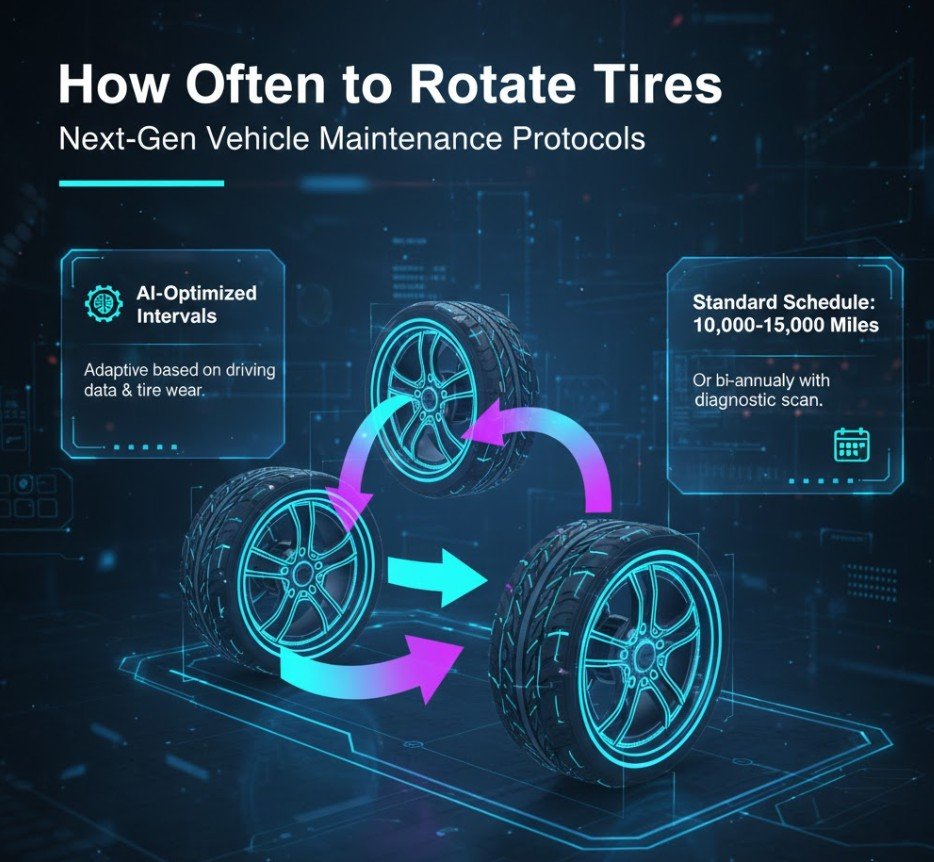
Tire rotation is one of the most important aspects of vehicle maintenance that can significantly extend the lifespan of your tires and improve vehicle performance. Whether you’re driving a compact sedan, an SUV, or an all-wheel-drive (AWD) vehicle. Knowing how often to rotate tires is essential for maximizing both safety and performance. But the right time to rotate your tires can depend on several factors such as your vehicle type, driving habits, and tire condition.
In this detailed guide, we’ll explore how often to rotate tires, why it’s necessary, and offer advice specific to different types of vehicles, including AWD systems. Let’s dive in!
Why Tire Rotation Is Important
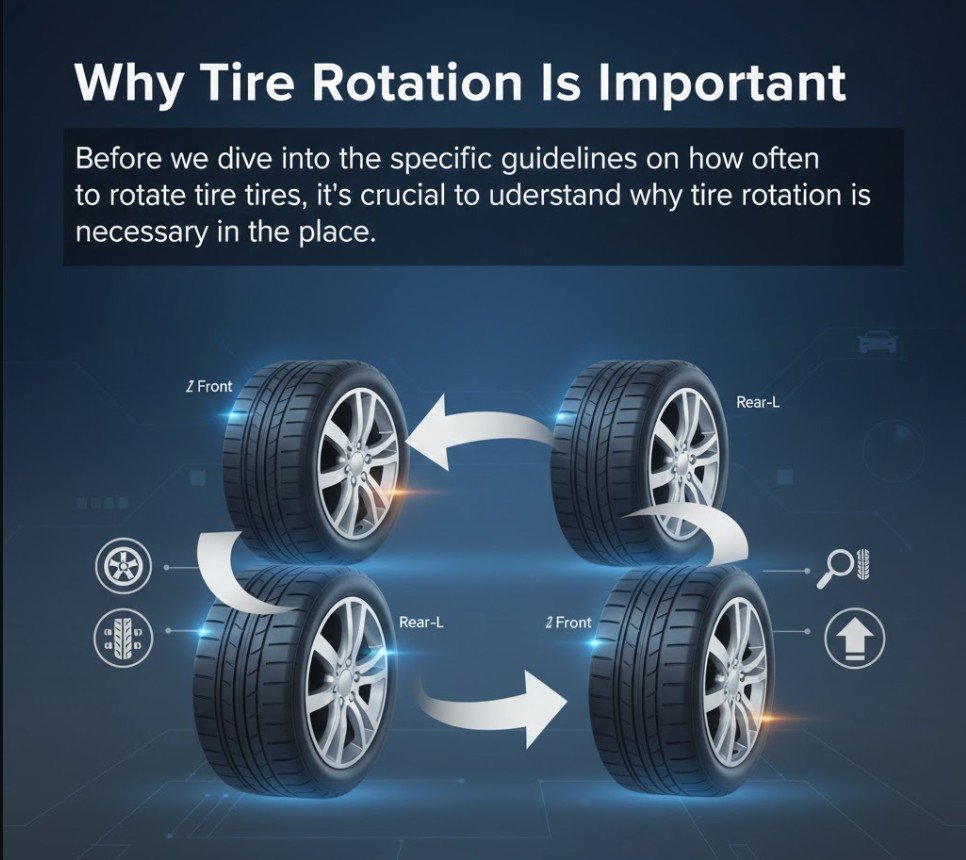
Before we dive into the specific guidelines on how often to rotate tires, it’s crucial to understand why tire rotation is necessary in the first place.
Tires experience wear and tear differently depending on their position on the vehicle. For example, the front tires of a front-wheel-drive vehicle typically wear faster because they handle both steering and most of the braking forces. Similarly, the rear tires of a rear-wheel-drive vehicle can wear unevenly due to the constant power delivery to the rear wheels.
By rotating your tires, you ensure that each tire wears evenly, helping to maintain balanced traction. Improving handling, and maximizing the lifespan of your tires. Uneven tire wear can lead to a number of issues, such as:
- Reduced Traction and Handling: Uneven wear can affect your vehicle’s grip on the road, especially in adverse conditions.
- Increased Risk of Blowouts: Tires that are excessively worn on one side are more susceptible to failure.
- Decreased Fuel Efficiency: Uneven tire wear can cause additional rolling resistance, leading to lower fuel efficiency.
To keep your vehicle running smoothly and efficiently, regular tire rotation is an easy yet essential task that shouldn’t be overlooked.
Also Read: How to Check Engine Oil: Complete Beginner-to-Pro Guide
How Often to Rotate Tires: General Guidelines
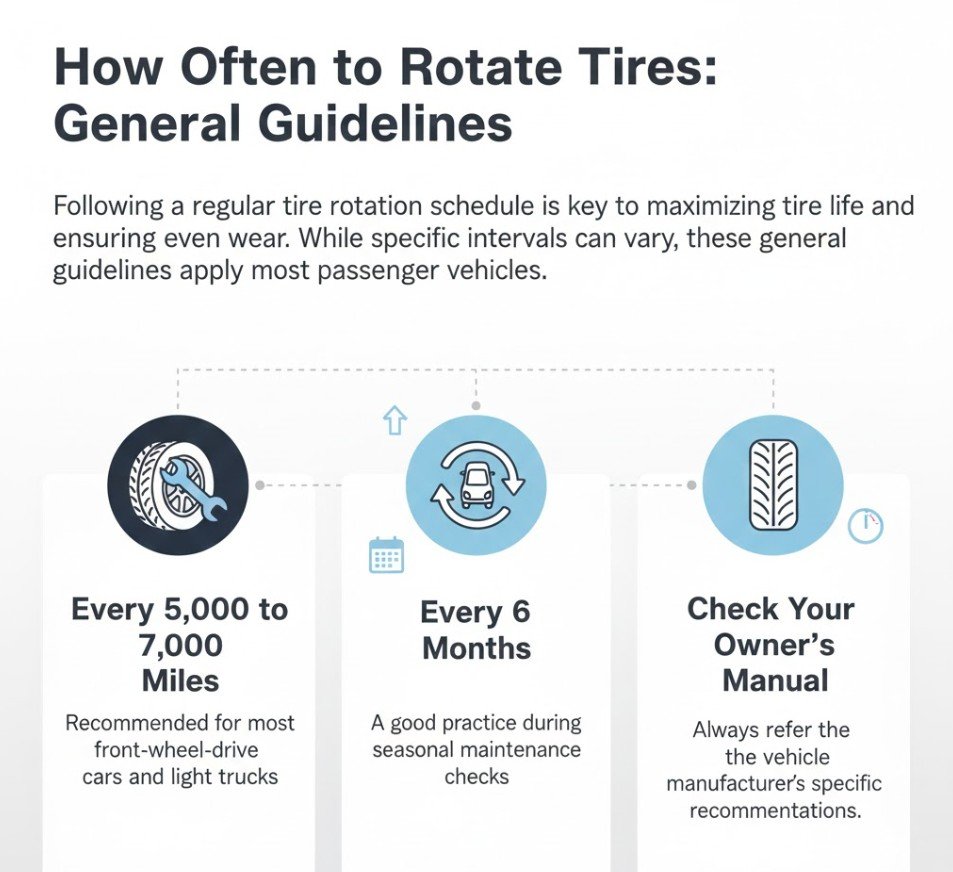
The general recommendation for how often to rotate tires is every 6,000 to 8,000 miles. However, this can vary based on several factors. Including your vehicle’s manufacturer recommendations, driving conditions, and the type of tires you’re using.
It’s always a good idea to check your vehicle’s owner’s manual for specific tire rotation recommendations. Most manufacturers suggest a rotation interval that falls within this 6,000 to 8,000-mile range. If you’re unsure, 7,500 miles is a safe middle ground for many vehicles.
Some vehicles may need more frequent rotations, especially if you frequently drive in challenging conditions, such as:
- Harsh weather (snow, rain, ice)
- Off-roading
- Towing heavy loads
How Often to Rotate Tires for AWD Vehicles
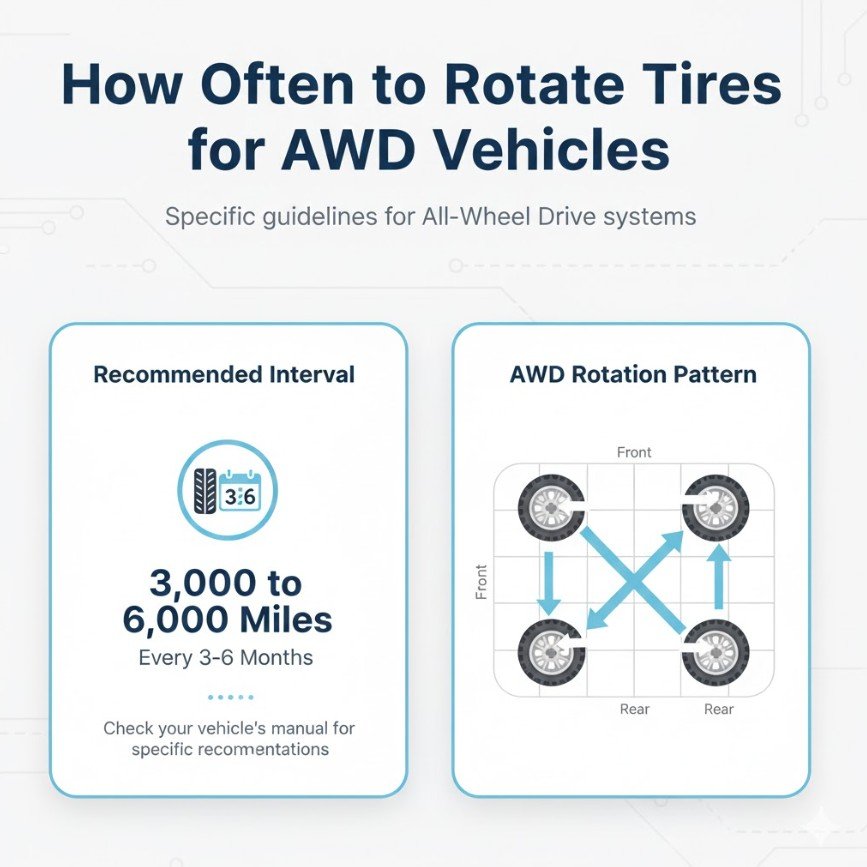
If you’re driving an all-wheel-drive (AWD) vehicle, you may wonder whether the frequency of tire rotation changes compared to a two-wheel-drive vehicle. The answer is yes: AWD systems place additional demands on your tires due to the constant power being delivered to all four wheels.
AWD vehicles generally require tire rotations more frequently than two-wheel-drive vehicles. This is because all four tires wear at a faster rate, and uneven wear on one tire can negatively affect the drivetrain and handling.
For AWD vehicles, it’s recommended to rotate your tires every 6,000 miles. Some manufacturers may suggest intervals of 5,000 miles, so it’s always wise to follow their specific guidelines.
An important factor to consider with AWD vehicles is the tire wear. For AWD systems to work correctly, all four tires need to have similar tread depths. Uneven tire wear can lead to increased strain on the AWD system, causing it to malfunction or even fail over time. Therefore, keeping track of tire rotation and replacing tires in sets (all four) is critical for maintaining the health of your AWD vehicle.
Also Read: How to Change a Tire Safely: Step-by-Step Guide
Factors That Affect Tire Rotation Frequency
While 6,000 to 8,000 miles is the general rule, certain conditions may necessitate more frequent tire rotations. Let’s explore these factors in more detail.
Driving Conditions
Your driving habits and the type of terrain you regularly drive on can influence how often to rotate tires. For example:
- City Driving vs. Highway Driving: If most of your driving is done on city streets with frequent stops and starts, your tires will wear more unevenly. In contrast, highway driving generally involves more consistent speeds, which leads to more even tire wear.
- Heavy Towing: If you regularly tow heavy loads or have a vehicle that frequently hauls heavy cargo. This can put additional stress on your tires, causing faster and more uneven wear. In this case, you might need to rotate your tires more often.
- Off-Road Driving: Vehicles used for off-road adventures will experience more aggressive tire wear due to rough terrains, rocks, and uneven surfaces. For such driving conditions, you may need to rotate your tires more often to prevent premature wear and tear.
Tire Type
The type of tires on your vehicle also plays a role in how often to rotate them. All-season tires tend to wear more evenly than specialized tires such as performance tires or winter tires. Performance tires, due to their design, may wear more quickly and unevenly, requiring more frequent rotation.
Additionally, if your vehicle is equipped with a staggered tire setup where the front and rear tires are different sizes. The rotation pattern will differ, and you may need to follow manufacturer-specific recommendations regarding tire rotations.
Tire Alignment and Suspension
Even with regular rotations, if your vehicle has alignment or suspension issues, your tires may still wear unevenly. Misalignment can cause your tires to wear on one side or in specific spots. Even if they are rotated as recommended.
Before setting a tire rotation schedule, it’s advisable to have your vehicle checked for alignment. If necessary, getting your suspension components checked can prevent premature tire wear and ensure that the tires are being properly rotated to even out the wear patterns.
Tire Rotation Patterns
There are several different tire rotation patterns that are commonly used, depending on your vehicle’s drivetrain and tire configuration.
Front-Wheel Drive (FWD)
For FWD vehicles, the front tires tend to wear more quickly because they handle both the steering and the majority of the braking. In most cases, the rear tires should be moved to the front. While the front tires should be rotated to the opposite sides of the rear axle. This ensures more even wear across all four tires.
Rear-Wheel Drive (RWD)
For RWD vehicles, the rear tires typically wear faster due to the driving force being sent to the back wheels. The rotation pattern for RWD vehicles is similar to FWD vehicles. With the rear tires moved to the front, and the front tires swapped to the rear axle on the opposite sides.
All-Wheel Drive (AWD)
In AWD vehicles, it is crucial to rotate the tires in a way that keeps all four tires wearing at the same rate. This helps prevent issues with the drivetrain and maintains optimal handling. AWD vehicles often use a specific rotation pattern that moves all four tires diagonally or in a front-to-back swap.
Cross-Pattern Rotation
For some tire types, a cross-pattern rotation can be used, especially if the tires are non-directional. This involves swapping the front tires with the rear ones and rotating the tires across the axles (front left to rear right, and front right to rear left).
Directional Tires
If your vehicle uses directional tires, which are designed to rotate in one direction for optimal performance, tire rotation needs to be done carefully. Directional tires must be moved to the opposite axle while maintaining the correct rotation direction. Therefore, only front-to-rear or rear-to-front rotations are possible without removing the tires from their rims.
How to Check if It’s Time to Rotate Tires

One of the best ways to determine if it’s time for a tire rotation is by inspecting the tread. Uneven tread wear, such as a noticeable difference between the front and rear tires, is a good indicator that it’s time for a rotation. Additionally, checking for any signs of misalignment or suspension problems can provide insight into how your tires are wearing and whether they require immediate attention.
Also Read: How to Check for Bed Bugs: A Complete Inspection Guide
Professional Tire Rotation
While it’s possible to rotate your tires yourself, many vehicle owners prefer to have the job done professionally. Tire shops often include tire rotation as part of a regular tire service or maintenance package. If you’re not sure about performing a rotation yourself, scheduling regular service appointments is a convenient and reliable option.
Conclusion
In conclusion, knowing how often to rotate tires is an essential part of vehicle maintenance that ensures optimal tire performance, increased safety, and prolonged tire life. The general recommendation is to rotate your tires every 6,000 to 8,000 miles, but factors like vehicle type, driving conditions, and tire type may influence this schedule.
For AWD vehicles, it’s particularly important to rotate tires more frequently and to follow the manufacturer’s guidelines to prevent damage to the drivetrain. Keeping up with tire rotations, along with proper alignment and regular tire checks. Will help you get the most out of your tires and enhance your driving experience.
