

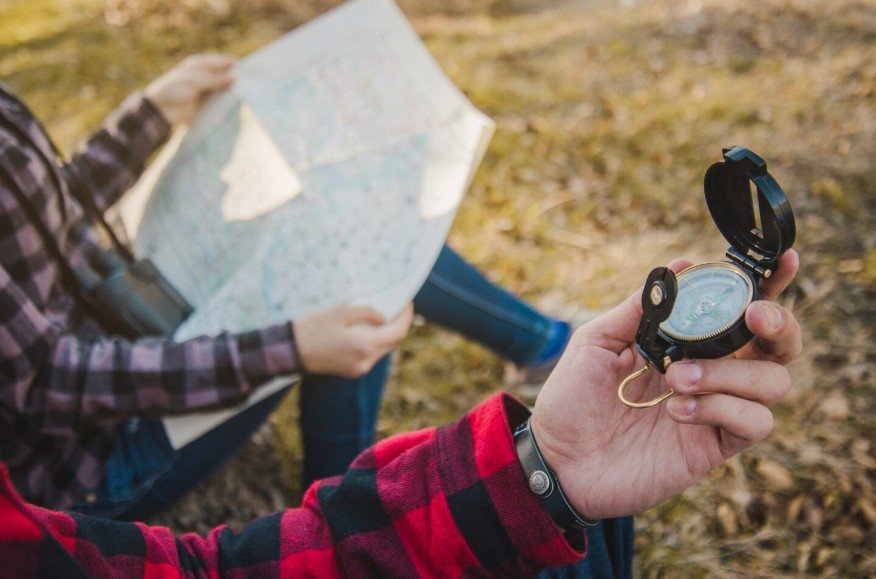
Navigating the great outdoors or even exploring your local area can be an exciting and rewarding experience. Whether you’re hiking, geocaching, or simply exploring a new neighborhood, a compass is one of the most valuable tools in your navigation toolkit. Understanding how to use a compass properly can help you find your way with confidence, even when you don’t have a map or GPS at your disposal.
In this comprehensive guide, we’ll teach you how to use a compass, whether you’re a beginner, teaching kids, or someone who needs to navigate without a map. We’ll break down the basics, provide step-by-step instructions, and offer practical tips for accurate navigation.
What is a Compass?
Before we dive into the how-to, let’s briefly define what a compass is and how it works. A compass is a navigational instrument used to determine direction based on the Earth’s magnetic field. It consists of a magnetized needle that always points toward the Earth’s magnetic north pole. This simple yet effective tool has been used by explorers, sailors, and hikers for centuries to determine direction and stay on course.
The Basics: Understanding Compass Parts
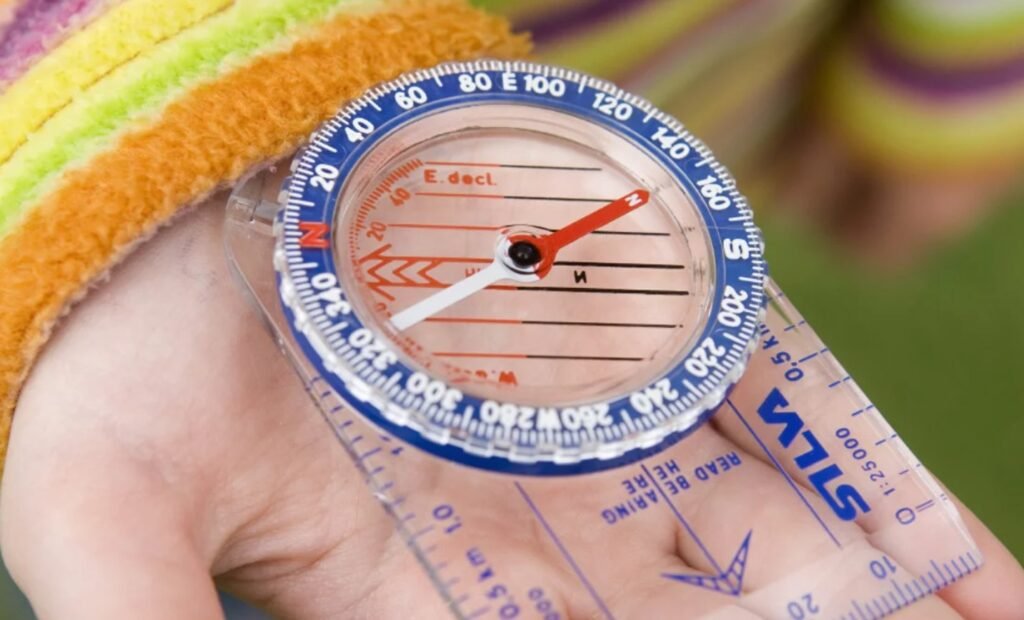
To effectively use a compass, you need to familiarize yourself with its parts. Most basic compasses have the following components:
- Magnetic Needle: This is the needle that points to magnetic north.
- Baseplate: The transparent platform that holds the compass. It’s often marked with a scale for measuring distance or a ruler for measuring in inches or centimeters.
- Azimuth Ring: The circular ring, often with degrees (0°–360°), that indicates direction.
- Direction-of-Travel Arrow: This arrow shows the direction you should head in.
- Orienting Arrow: This is a fixed arrow inside the compass that you align with the magnetic needle to determine your heading.
- Declination Adjustment: Some compasses include a small screw or dial to adjust for magnetic declination, which corrects the difference between magnetic north and true north.
Understanding these parts will make it much easier to follow the instructions in the next sections.
How to Use a Compass for Beginners

Step 1: Familiarize Yourself with the Compass
Before setting out, hold your compass flat and allow the magnetic needle to align with magnetic north. It may take a few seconds to stabilize. The compass needle should always point north, with the red part of the needle indicating magnetic north.
Step 2: Set Your Bearing
To begin navigating, you need to set a bearing. Here’s how to do it:
- Determine Your Desired Direction: Whether you are trying to navigate to a landmark or follow a specific path, you’ll need to know the direction you want to travel. If you’re navigating without a map, use the compass to locate visible landmarks, such as a mountain or a building.
- Align the Compass: Place the compass flat in your palm. Rotate the compass housing (the azimuth ring) so that the direction-of-travel arrow points toward your desired destination. Keep the compass level to ensure accuracy.
- Adjust for Declination (if applicable): If you know the magnetic declination for your area, adjust the compass to account for the difference between magnetic north and true north.
- Set the Azimuth: Once you’ve aligned the compass to your target, read the degree on the azimuth ring. This is your bearing (direction), which you will follow.
Step 3: Navigate Using Your Bearing
Now that you have your bearing, it’s time to navigate:
- Hold the Compass Steady: Hold your compass in front of you with the direction-of-travel arrow pointing straight ahead. The magnetic needle should be floating freely, allowing it to orient itself.
- Align the Needle with the Orienting Arrow: Rotate your body and the compass until the magnetic needle lines up with the orienting arrow. This means you’re heading in the right direction.
- Walk in a Straight Line: As you walk, keep checking your compass to ensure you are maintaining your bearing. If the needle drifts or if you need to adjust, simply realign the needle and orienting arrow.
- Adjust as Needed: While navigating, terrain or obstacles might require you to make slight adjustments. Just be sure to check your bearing again periodically to stay on course.
Step 4: Maintain Your Bearings
As you continue to move, check your compass every few minutes to ensure that you are still on track. If you find yourself veering off course, realign your compass and make necessary adjustments.
Also Read: How to Minimize Pores: Expert Tips for Smooth Skin
How to Use a Compass Without a Map
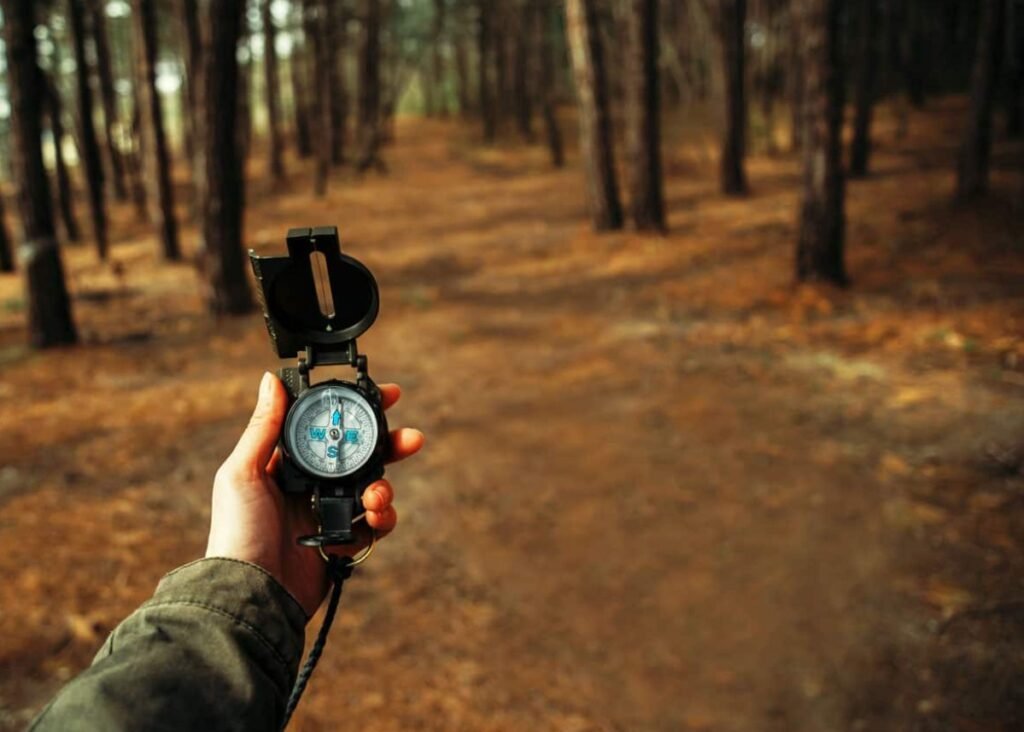
Many outdoor enthusiasts find themselves without a map, but with a compass in hand, there’s no need to worry. Here’s how you can navigate without a map:
- Identify Landmarks: Look for visible landmarks such as mountains, hills, rivers, or buildings. Use these to orient your compass and set your bearing. For example, if you’re trying to walk towards a mountain, line up your compass with the mountain and note your bearing.
- Estimate Distance and Time: Using only a compass without a map means you need to estimate how far you’ve traveled and the direction you are heading. Track your steps or use a pacing method to gauge distance. For example, count your steps, or use your pace count to estimate how far you’ve gone in a set amount of time.
- Adjust for Obstacles: In the absence of a map, you may need to improvise to avoid natural obstacles like rivers, dense forests, or cliffs. Keep your compass handy and adjust your bearing if necessary, always taking note of your surroundings to make sure you’re still heading in the right direction.
Also Read: How to Make Playdough: Easy Guide for Soft, Homemade Playdough
How to Use a Compass for Kids
Teaching kids how to use a compass can be a fun and educational experience. Here’s how to introduce the compass to young learners:
- Start with the Basics: Explain how a compass works by showing them the magnetic needle and the direction-of-travel arrow. Help them understand that the needle always points north, and that the compass helps them figure out where they’re going.
- Make it Interactive: Use a simple treasure hunt or a nature walk as a practical example. Let kids try to use the compass to navigate to different points in the area. Make sure to keep it fun and engaging, offering praise and encouragement along the way.
- Use Simple Directions: Rather than using complex bearings, you can teach kids basic directions like north, south, east, and west. Ask them to orient themselves in these basic directions, then gradually introduce them to more detailed navigation techniques.
- Be Patient: Kids may take time to grasp the concept of using a compass. Start slow, ensure they are having fun, and encourage them to experiment. Over time, they will learn the benefits of using a compass for navigation.
Also Read: How to Calculate Square Feet: Easy Step-by-Step Guid
Common Compass Mistakes to Avoid
To ensure you’re getting the most out of your compass, here are some common mistakes to avoid:
- Holding the Compass Incorrectly: Always keep the compass level for accurate readings. Tilting or angling the compass can lead to inaccurate bearings.
- Ignoring Magnetic Declination: Not adjusting for magnetic declination can cause you to miscalculate your direction. Always check your area’s declination before setting your bearing.
- Forgetting to Recheck Your Bearing: As you move, make sure to check your compass regularly to stay on course. Changes in terrain or obstacles can easily throw you off track.
- Relying Solely on the Compass: While a compass is essential, it’s important to also pay attention to your surroundings and use natural landmarks for orientation.
Conclusion
Learning how to use a compass is an essential skill for outdoor navigation. Whether you’re a beginner, teaching kids, or navigating without a map, understanding the basics of compass use can help you feel confident in your ability to find your way. By familiarizing yourself with your compass, setting accurate bearings, and navigating with confidence, you can ensure your next adventure is safe and successful.
If you’re just starting, take your time practicing these skills in safe, familiar areas. With patience and practice, using a compass will become second nature. Stay curious, and happy navigating!
FAQs
1. Can I use a compass without a map?
Yes! A compass can help you navigate without a map by aligning with visible landmarks and adjusting your bearing as needed.
2. How do I teach my kids to use a compass’s?
Start with simple directions (north, south, east, west) and make it fun by creating a scavenger hunt or nature walk for them to practice.
3. What is magnetic declination?
Magnetic declination is the difference between true north (geographic north) and magnetic north. It varies by location and should be accounted for when using a compass.
4. How do I know if my compass’s is accurate?
Ensure your compass’s is held level and check for any nearby magnetic interference (such as electronic devices or large metal objects) that may affect its accuracy.
