

Knowing how to check engine oil is one of the most important basic car maintenance skills every driver should have. Engine oil is the lifeblood of your vehicle, lubricating moving parts, reducing friction, controlling temperature, and preventing premature engine wear. Yet many drivers overlook this simple task until a warning light appears or, worse, engine damage has already occurred.
This comprehensive guide explains how to check engine oil level correctly, safely, and confidently, even if you have never opened a car hood before. Drawing on real-world automotive experience and manufacturer best practices, this article covers traditional dipstick checks, modern electronic oil monitoring systems, common mistakes, and professional tips that mechanics rely on daily. By the end, you will fully understand how to check engine oil level in car models old and new, why it matters, and how often you should do it.
Why Engine Oil Matters More Than Most Drivers Realize
Engine oil performs several critical functions simultaneously. It lubricates internal components such as pistons, crankshafts, and camshafts to minimize metal-on-metal contact. It also helps cool the engine by carrying heat away from high-friction areas. In addition, engine oil cleans by suspending dirt and microscopic metal particles so they can be filtered out.
According to automotive engineering studies, insufficient oil levels or degraded oil quality can increase engine wear by over 60 percent. Low oil levels are among the most common causes of catastrophic engine failure, particularly in modern engines that operate at tighter tolerances and higher temperatures.
Understanding how to check engine oil regularly is not just about maintenance; it is about protecting one of the most expensive components of your vehicle.
How Often Should You Check Engine Oil Level?
Most automotive professionals recommend checking engine oil at least once a month and before any long trip. Older vehicles or high-mileage engines may consume oil more quickly and should be checked more frequently. Newer cars often burn less oil, but that does not eliminate the need for routine checks.
Driving habits also affect oil consumption. Frequent short trips, heavy loads, towing, high-speed driving, and extreme temperatures can all increase oil usage. By routinely checking oil levels, you can catch potential problems early and avoid costly repairs.
Understanding Different Types of Engine Oil Systems
Before learning how to check engine oil level in car models, it is important to understand that not all vehicles use the same system. Traditional cars use a physical dipstick, while many newer vehicles rely on electronic oil level sensors accessed through the dashboard.
Some vehicles combine both systems, while others have eliminated the dipstick entirely. Always consult your owner’s manual to confirm which method your vehicle uses.
How to Check Engine Oil Level Using a Dipstick
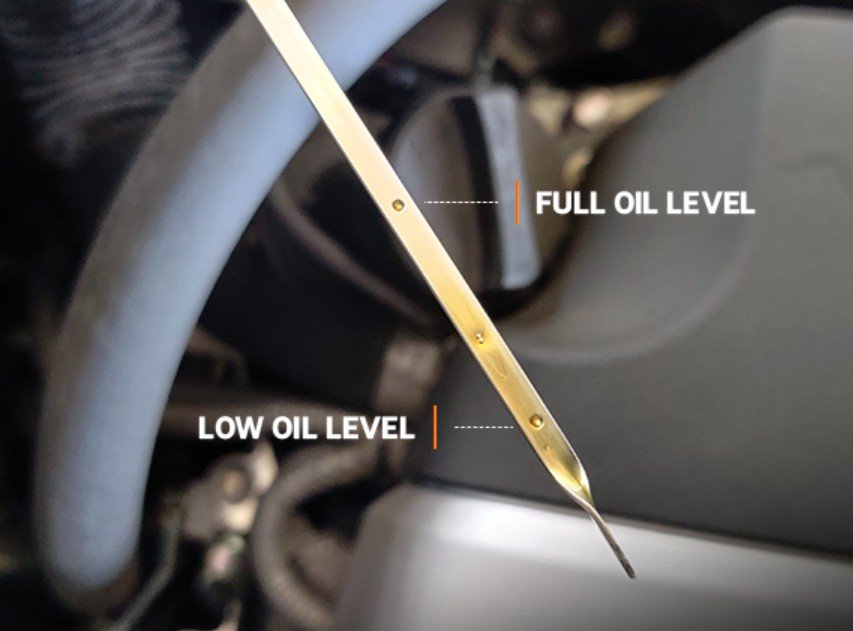
For vehicles equipped with a dipstick, this method remains the most accurate and reliable way to assess oil level and condition.
Preparing the Car for an Accurate Reading
To get a precise reading, the car should be parked on level ground. The engine should be turned off, and ideally allowed to cool for at least five to ten minutes. This allows oil to drain back into the oil pan, ensuring a true measurement.
Checking oil immediately after turning off the engine may give a falsely low reading, while checking after the engine has been sitting overnight may show a slightly higher level. Consistency is key, so try to check oil under similar conditions each time.
Locating and Using the Dipstick Correctly
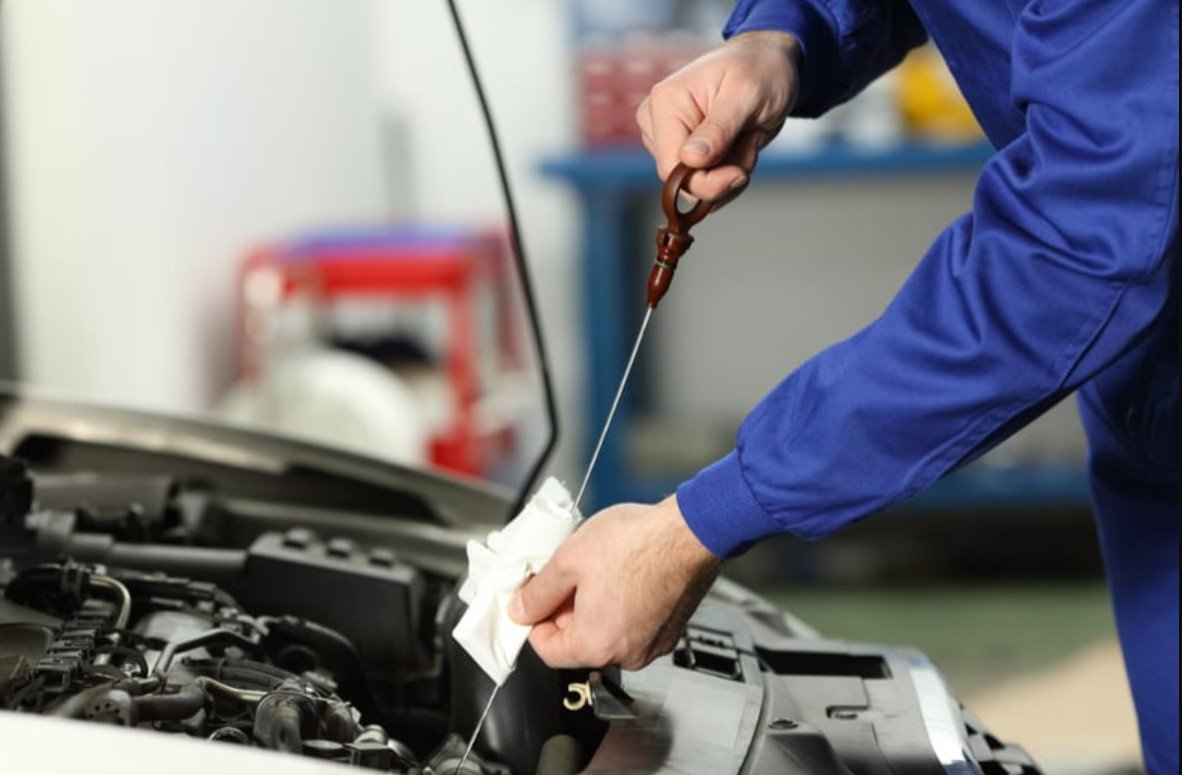
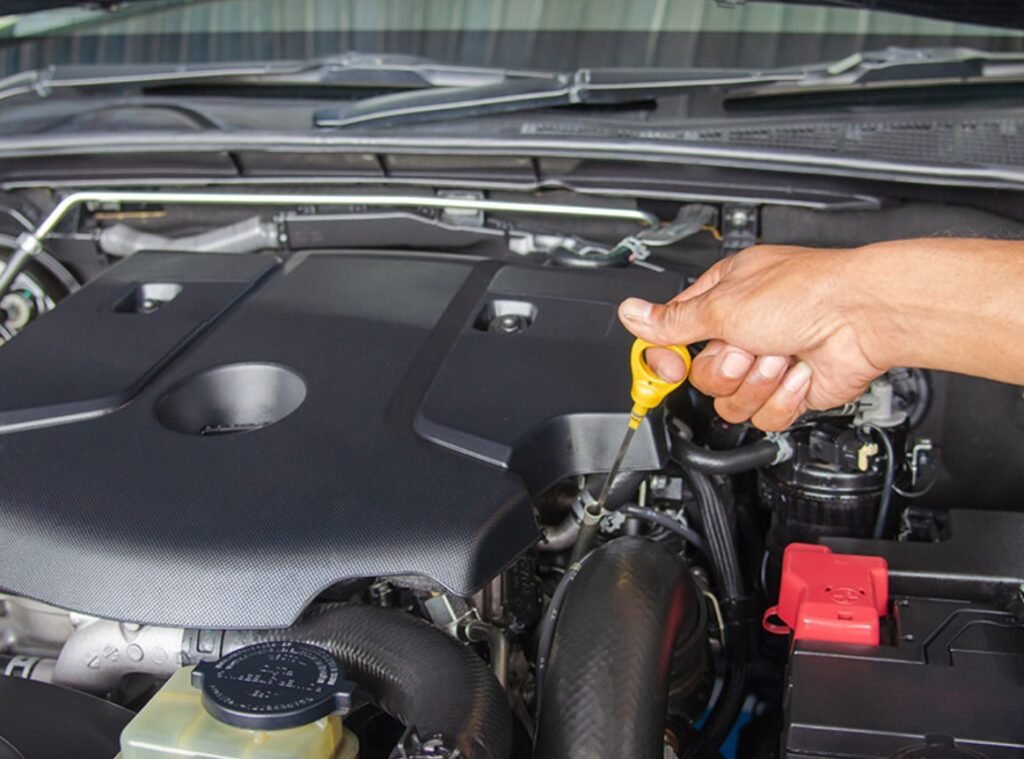
Open the hood and locate the dipstick, usually marked with a bright-colored handle. Pull it out fully and wipe it clean with a lint-free cloth or paper towel. Reinsert the dipstick completely, then remove it again to read the oil level.
The dipstick will have markings indicating the minimum and maximum acceptable oil levels. The oil should fall between these marks. If the level is near or below the minimum mark, oil should be added promptly.
This process is the foundation of how to check engine oil level correctly and is taught in every professional automotive training program.
How to Read Engine Oil Condition on the Dipstick
Checking oil level is only part of the process. Oil condition also provides valuable insights into engine health.
Fresh engine oil typically appears amber or light brown. As oil ages, it darkens due to heat and contamination. Dark oil alone does not necessarily mean it needs to be changed, but gritty texture, strong burnt smells, or milky coloration may indicate serious problems such as coolant contamination or internal engine wear.
Learning how to check engine oil properly includes observing both level and quality.
How to Check Engine Oil Level in Cars Without a Dipstick
Many modern vehicles, especially luxury and European models, use electronic oil level monitoring systems. In these cars, oil level is checked through the infotainment screen or instrument cluster menu.
The process usually requires the car to be parked on level ground, with the engine either warm or at operating temperature. The system then measures oil level electronically and displays the result.
While convenient, electronic systems can be less intuitive. Reading the owner’s manual carefully is essential. Understanding how to check engine oil level in car models with digital systems prevents misinterpretation of warnings or incorrect assumptions.
Also Read: How to Check Transmission Fluid Level Correctly
Common Mistakes When Checking Engine Oil
One of the most common mistakes drivers make is checking oil on an incline or uneven surface. This can lead to inaccurate readings and unnecessary oil additions.
Another frequent error is overfilling. Adding too much oil can cause foaming, increased pressure, and damage to seals and catalytic converters. Always add oil gradually and recheck the level.
Using the wrong oil type is another critical mistake. Engine oil viscosity and specifications vary by vehicle. Always follow manufacturer recommendations to ensure optimal lubrication and engine protection.
When Low Oil Level Signals a Bigger Problem
If you find yourself adding oil frequently, it may indicate underlying issues such as oil leaks, worn piston rings, or valve seal problems. Blue smoke from the exhaust, oil spots under the car, or a persistent oil smell are signs that should not be ignored.
Understanding how to check engine oil regularly helps detect these problems early, potentially saving thousands in repair costs.
How Engine Oil Level Affects Performance and Fuel Efficiency
Proper oil level directly affects engine performance. Low oil increases friction, leading to reduced power and higher fuel consumption. Studies show that insufficient lubrication can decrease fuel efficiency by up to two percent, which adds up over time.
Maintaining correct oil levels also ensures smoother operation, quieter engine noise, and improved longevity.
Seasonal Considerations for Checking Engine Oil
Temperature changes affect oil viscosity. In cold weather, oil thickens, while high temperatures cause it to thin. Checking oil during seasonal transitions is particularly important, as consumption rates may change.
In winter, short trips can lead to moisture buildup in oil, while summer heat accelerates oil breakdown. Regular checks ensure your engine remains protected year-round.
Also Read: How to Change a Tire Safely: Step-by-Step Guide
Professional Tips from Experienced Mechanics
Experienced technicians recommend checking oil at the same time each month to build a habit. They also advise keeping a quart of the correct oil in the trunk for emergencies.
Another expert tip is to monitor oil consumption patterns. A sudden increase often signals mechanical issues long before warning lights appear.
Knowing how to check engine oil is one of the simplest ways to think like a professional mechanic.
How Checking Engine Oil Supports Long-Term Vehicle Value
Routine oil monitoring contributes significantly to vehicle longevity and resale value. Service records showing consistent maintenance reassure buyers and dealers alike.
Engines that are well-lubricated suffer less internal wear, maintain compression longer, and operate more efficiently over time.
Environmental Impact of Proper Oil Maintenance
Maintaining proper oil levels also benefits the environment. Efficient engines produce fewer emissions and reduce oil waste. Catching leaks early prevents oil from contaminating soil and waterways.
Understanding how to check engine oil level is not only good for your car but also environmentally responsible.
Also Read: How to Check for Bed Bugs: A Complete Inspection Guide
Frequently Asked Questions About Checking Engine Oil
Can I check engine oil when the engine is hot?
Yes, but results may vary. Most manufacturers recommend checking oil when the engine is warm but turned off for several minutes.
What happens if I drive with low engine oil?
Driving with low oil can cause overheating, increased friction, and severe engine damage within minutes.
How long does it take to check engine oil?
Once familiar with the process, checking oil takes less than two minutes.
Is dark oil always bad?
Not necessarily. Oil naturally darkens with use. Texture and smell are more important indicators.
Conclusion: Why Every Driver Should Know How to Check Engine Oil
Learning how to check engine oil is a fundamental skill that empowers drivers to protect their vehicles, save money, and avoid unnecessary stress. Whether using a traditional dipstick or a modern electronic system, regular oil checks ensure optimal engine performance and longevity.
By understanding how to check engine oil level and recognizing early warning signs, you take control of your car’s health rather than relying solely on dashboard alerts or service reminders. This simple habit reflects responsible vehicle ownership and aligns with professional automotive best practices.
