

Maintaining the correct oil level in your vehicle is crucial for its longevity and optimal performance. Whether you drive a car, truck, or even a Yamaha Grizzly 600, checking your oil regularly is an essential task that every vehicle owner should understand. This guide will walk you through how to check oil in various vehicles, including cars, diesel trucks, and motorcycles, and provide insights into recognizing the importance of oil levels and oil quality.
By the end of this article, you’ll know how to check oil levels, understand how to check oil pressure, and know how to check oil on a dipstick, ensuring your vehicle runs smoothly and stays in top shape.
Why Checking Oil is Important
Checking your oil is one of the most essential maintenance tasks for any vehicle. Oil acts as a lubricant for the engine parts, reducing friction and preventing excessive wear. If the oil level gets too low or the oil quality degrades, it can lead to engine damage, overheating, or even engine failure.
Regularly checking your oil helps prevent these issues by ensuring the oil level is correct and the oil’s quality is optimal. Here’s how to perform this simple yet vital task.
how to check oil in a Car: Step-by-Step Instructions
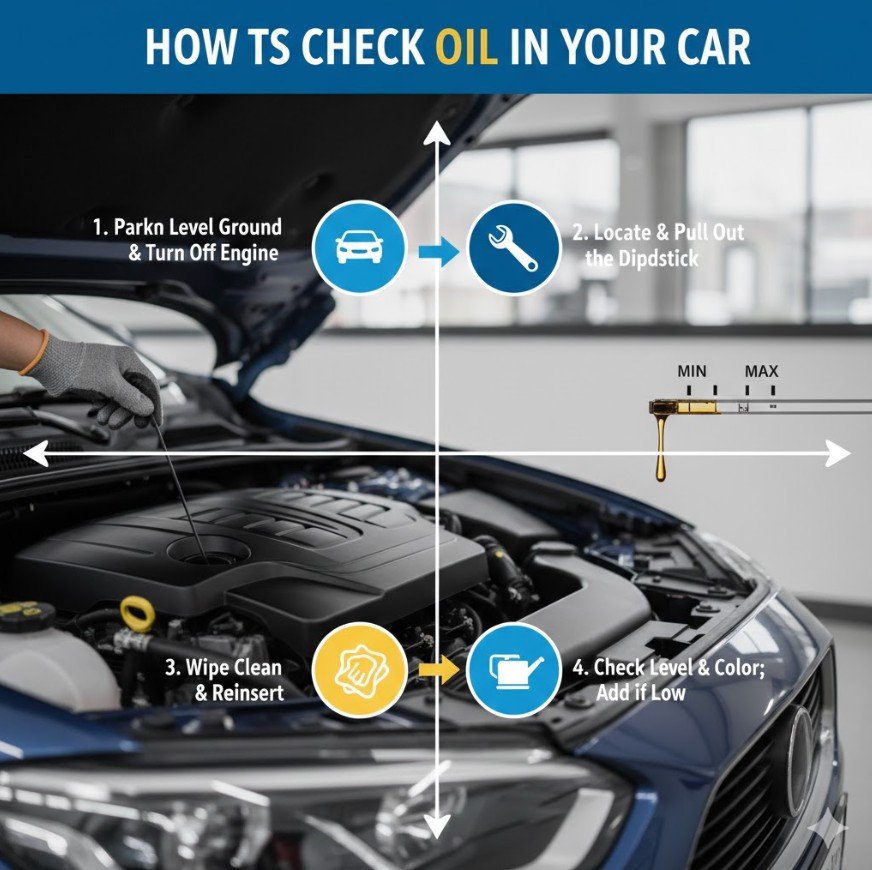
Checking oil in your car is easy, and with the right tools, you can perform this task in just a few minutes. Here’s a step-by-step guide on how to check oil in your car.
1. Park Your Car on Level Ground
Before you start checking your oil level, make sure your vehicle is parked on level ground. This ensures you get an accurate reading of the oil level.
2. Turn Off the Engine and Wait for a Few Minutes
For the most accurate reading, let your engine cool down for about 5-10 minutes after turning off the car. This allows the oil to settle in the oil pan.
3. Locate the Oil Dipstick
To check oil level in a car, you’ll need to find the oil dipstick. Most vehicles have an oil dipstick with a brightly colored handle (yellow or orange) under the hood. If you’re unsure of its location, check your car’s manual.
4. Remove the Dipstick and Wipe It Clean
Pull the dipstick out, wipe it clean with a lint-free cloth or paper towel to remove any old oil. This step helps ensure you get an accurate reading when checking the oil level.
5. Reinsert the Dipstick and Remove It Again
After wiping the dipstick clean, reinsert it back into the tube all the way, then pull it out again. This is the moment where you can see the oil level and condition.
6. Check the Oil Level and Color
Look at the markings on the dipstick, usually labeled “Low” and “Full.” If the oil level is near or below the “Low” mark, it’s time to add oil. Additionally, check the oil’s color. Fresh oil typically has a translucent amber or golden color, while old oil may appear dark and gritty. If the oil looks too dark or has a burnt smell, it’s time for an oil change.
7. Add Oil if Needed
If the oil level is low, add the recommended oil for your vehicle. Use a funnel to avoid spills and add oil gradually, checking the level as you go. It’s crucial not to overfill the oil, so check the level after adding a small amount and adjust as necessary.
How to Check Oil Level in a Diesel Truck
Diesel engines are different from gasoline engines, and so is the process of checking oil in a diesel truck. Here’s how to check oil in a diesel truck:
- Park on Level Ground: Just like with any other vehicle, ensure your diesel truck is parked on level ground to get an accurate oil reading.
- Locate the Dipstick: Diesel trucks often have a similar dipstick to gasoline engines, but the placement can vary. Refer to the truck’s owner’s manual if necessary.
- Follow the Same Steps: Remove the dipstick, wipe it clean, reinsert it, and then check the oil level. You should also check the oil color and texture to gauge its condition.
- Add Oil if Low: Diesel trucks require a certain oil grade, so make sure to use the correct type recommended in the manual.
How to check oil Pressure in a Car
The oil pressure is an essential aspect of engine health. If your car is experiencing low oil pressure, it may indicate a problem with the oil pump, oil filter, or oil itself. Here’s how to check oil pressure:
- Check the Dashboard Oil Pressure Light: Most modern vehicles have an oil pressure light on the dashboard. If the light is on, it’s an indication that your car’s oil pressure is low and you should stop the vehicle and check the oil.
- Use an Oil Pressure Gauge: Some vehicles have a built-in gauge that displays the oil pressure. Alternatively, you can use an external oil pressure gauge to check the oil pressure manually. A typical oil pressure reading should be between 25 and 65 psi, depending on your vehicle.
Also Read: How to Check Engine Oil: Complete Beginner-to-Pro Guide
How to Check Oil Level on Dashboard
Many newer cars come with a digital oil level indicator on the dashboard. Here’s how to check oil level on your dashboard:
- Check the Car’s Display: Many modern vehicles provide a digital readout of your oil level and even show if the oil is too low or needs changing.
- Refer to the Manual: If your car has a dashboard oil level indicator, refer to the vehicle’s manual for specific instructions. Some systems may also show warnings if the oil needs a change or the level is low.
How to check oil Temperature Without a Thermometer
Some vehicles, particularly performance cars or motorcycles, have sensors to measure the oil temperature. If your vehicle does not have an oil temperature gauge, you can still get an idea of the oil temperature by following these steps:
- Drive the Vehicle for a Few Minutes: Let your vehicle warm up by driving it for 10-15 minutes. This gives the engine oil time to heat up and spread throughout the engine.
- Check for Oil Pressure Fluctuations: If your oil temperature is too high, it may lead to fluctuating oil pressure. Monitor your vehicle’s oil pressure closely after driving.
How to check oil in Your Yamaha Grizzly 600
Checking the oil in a Yamaha Grizzly 600 is slightly different from a car or truck. Here’s how you can check the oil in your Yamaha Grizzly 600:
- Warm Up the Engine: Start the engine and let it warm up for a few minutes.
- Locate the Oil Dipstick: On the Yamaha Grizzly 600, the oil dipstick is located near the right side of the engine.
- Remove and Clean the Dipstick: As with cars and trucks, remove the dipstick, wipe it clean, and then reinsert it to check the oil level.
- Add Oil if Needed: If the oil level is low, add the recommended oil for your Grizzly 600.
How to Check Oil in a Car Using a Dipstick
Checking oil level on dipstick is one of the most straightforward ways to assess your oil condition. Here’s a refresher on how to check oil on dipstick:
- Pull the Dipstick: Pull out the dipstick and clean it with a lint-free cloth.
- Reinsert and Remove: Push the dipstick back into the tube, ensuring it’s seated properly, and remove it to check the oil level.
- Examine the Oil Level and Quality: Look for the oil’s color and texture. Fresh oil is golden or amber, while old oil can be dark and thick.
Also Read: How to Change a Tire Safely: Step-by-Step Guide
How to Check Oil Level in a Car: Common Questions
1. How Often Should I Check My Oil Level?
It’s recommended to check your oil level at least once a month and before long trips to ensure your engine is running smoothly. For some vehicles, checking oil every 3,000 miles is a good rule of thumb.
2. What if My Oil Level is Low?
If your oil level is low, top it off with the appropriate oil for your vehicle. If you notice the oil continues to deplete rapidly, it could indicate a leak or internal engine issue.
3. How Do I Know If My Oil Needs Changing?
Aside from checking the oil level, assess its color and consistency. If the oil appears very dark or gritty, it’s time for an oil change. Additionally, always follow the recommended oil change interval in your owner’s manual.
Also Read: How Often to Rotate Tires: Essential Tips for Tire Maintenance
Conclusion: Ensuring Proper Oil Maintenance
Knowing how to check oil is vital for keeping your vehicle in top working condition. Whether you’re checking oil in a car, diesel truck, or motorcycle, the steps are simple but critical for engine health. Regularly checking your oil levels, pressure, and color ensures your engine stays well-lubricated and runs smoothly. With this guide, you’ll be able to perform oil checks confidently, extending the life of your vehicle and avoiding costly repairs.
For More Visit Fex Novo
